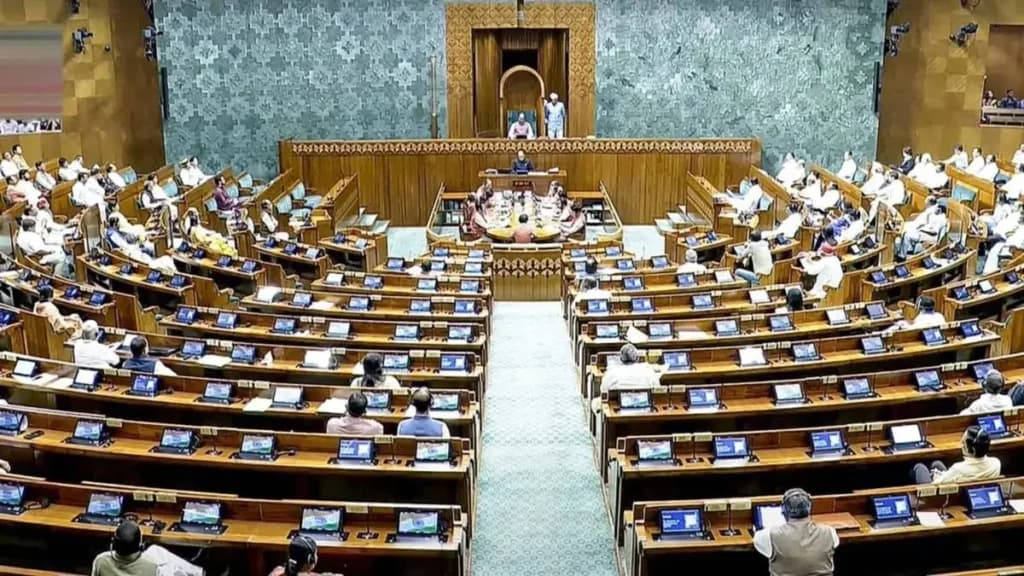
NEW DELHI: The legislative session in the national capital ground to a halt once again as the Union Government formally introduced the highly anticipated new Anti-Paper Leak Bill also known as the Public Examinations (Prevention of Unfair Means) Amendment Bill, 2026.
Tabled in the Lok Sabha on Monday by Union Minister of State for Personnel, Public Grievances and Pensions, Jitendra Singh, the proposed legislation is designed to aggressively combat examination-related crimes, paper leaks, and widespread malpractice. However, despite the critical nature of the bill, the proceedings were completely derailed by furious protests from Opposition benches.

Amended Anti-Paper Leak Bill Aims Stringent Penalties and Fast-Track Courts
The newly proposed amendments under the Anti-Paper Leak Bill seek to radically strengthen the existing 2024 law by introducing drastically harsher penalties for any individual or organized group found guilty of compromising public recruitment and entrance examinations.
Under the new framework, the minimum jail term for convicted individuals is raised from three to five years, with a maximum imprisonment period extending up to 10 years. The financial penalties have also seen a massive increase. For private service providers or agencies engaged by examination authorities, the fines have jumped from ₹1 crore to a maximum of ₹5 crore.

Furthermore, any agency found complicit in such malpractices will face a debarment period doubled to eight years, preventing them from handling any public examinations during that time. For organized networks and syndicates orchestrating mass paper leaks, the minimum financial penalty is proposed to rise to ₹10 crore.
To ensure that justice is not delayed, the bill mandates the establishment of Special Fast Track Courts across states and Union Territories. These designated courts must conduct day-to-day proceedings with the strict goal of completing trials within three months of the chargesheet being filed. Investigations by the police or a Central Special Task Force are also legally bound to be completed within a two-month timeframe.
ALSO READ: Modi Govt. Sacks 47 NTA Officials, Approves Anti-Paper Leak Bill As CJP Protests Intensify
Protests Over Police Brutality Halt Proceedings
Despite Lok Sabha Speaker Om Birla offering a dedicated six-hour window for a comprehensive debate on the bill—noting that 91 amendments had been moved—no legislative debate took place. Both Houses were adjourned for the day as Opposition MPs continuously disrupted proceedings with loud sloganeering.

The Opposition demanded a formal, on-the-record statement from the Home Ministry regarding the severe police brutality inflicted upon student protesters in Delhi during the July 20 ‘Sansad Chalo’ march. The Treasury benches retaliated fiercely, with BJP MP Sambit Patra accusing the Leader of the Opposition, Rahul Gandhi, of spreading absolute falsehoods regarding the police’s use of force on the students. The political deadlock ensures that the critical anti-cheating legislation remains in limbo while the crisis continues to unfold.