NEW DELHI: YouTuber Dhruv Rathee on Wednesday alleged that Delhi Police and Intelligence Bureau (IB) personnel were following him in unmarked vehicles, accusing the authorities of carrying out illegal surveillance following his recent detention ahead of a planned protest in the national capital.
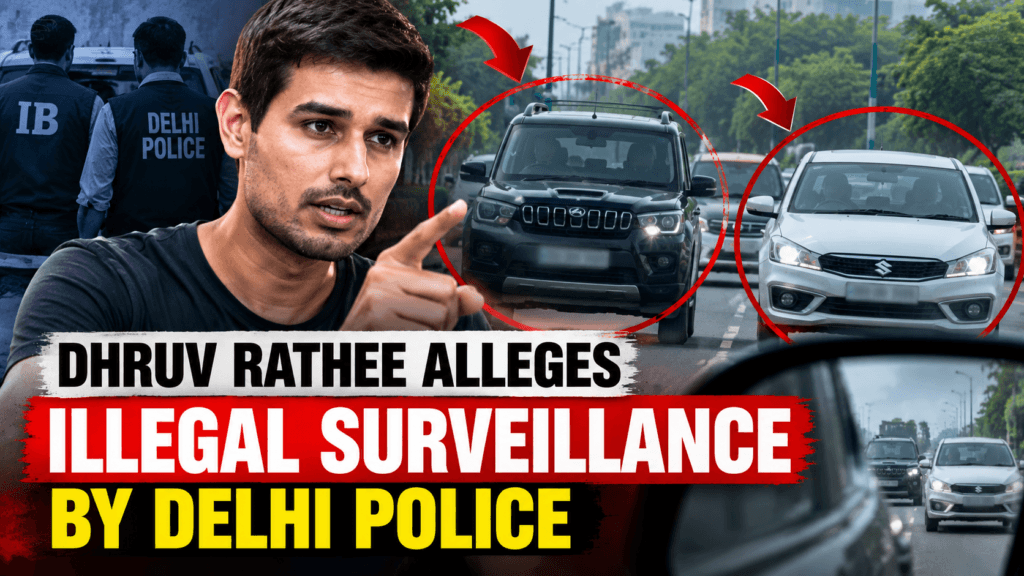
In a video shared on social media on October 14, Rathee pointed towards a Mahindra Scorpio and a white Maruti Suzuki Ciaz, claiming that the vehicles had been following his car after he left his residence in Gurugram. Addressing Delhi Police in a post accompanying the video, Rathee questioned the alleged use of public funds to monitor him. He also suggested that a large number of personnel could have been deployed to track his movements.
The identities of the occupants of the vehicles, their alleged affiliation with law-enforcement agencies and whether they were conducting surveillance could not be independently verified from the video.
The latest allegations come days after Dhruv Rathee was detained ahead of a planned demonstration organised by the Cockroach Janta Party (CJP) against Chief Election Commissioner Gyanesh Kumar over concerns surrounding the Special Intensive Revision (SIR) of electoral rolls.
ALSO READ: ‘I was kidnapped’: Dhruv Rathee accuses Modi government and Delhi Police after release
What did Dhruv Rathee allege?
In the video posted on Wednesday, Dhruv Rathee showed vehicles travelling behind his car and claimed that they had been following him for a considerable period. He directly questioned the authorities over what he described as the use of taxpayers’ money for illegal surveillance.
Rathee also speculated about the number of personnel allegedly involved, suggesting that several individuals might have been deployed to monitor his movements.
However, the footage does not independently establish who was inside the vehicles, whether they belonged to the police or the Intelligence Bureau, or the purpose of their presence.
Rathee’s allegations had not been independently confirmed as of Wednesday evening. No verified public explanation from Delhi Police regarding the latest video was available in the reports reviewed.
Why was Dhruv Rathee detained earlier?
Dhruv Rathee was detained from his residence in Gurugram on October 10, ahead of a planned CJP protest at Jantar Mantar in Delhi.
In a video released after his release, he alleged that around 20 people in plain clothes entered his home early in the morning and took him away without adequately explaining the reason for the action.

Dhruv Rathee also claimed that he was moved between police stations and was unable to contact his lawyer or access his phone for approximately 22 to 23 hours. Rathee described the episode as a kidnapping rather than a lawful detention.
He was released in the early hours of October 11. Delhi Police cited preventive action and restrictions imposed ahead of the proposed demonstration as the basis for its action against protesters. Police sources also indicated that further legal action could follow if restrictions were violated.
The allegations concerning his treatment and the legality of the detention remain disputed and should be assessed separately from his latest claims of surveillance.
What is the connection with the CJP protests?
The CJP demonstrations were organised amid growing opposition to the Election Commission’s Special Intensive Revision of electoral rolls. Opposition parties and activists have raised concerns that the exercise could result in eligible voters being removed from electoral lists. They have demanded greater transparency and called for Chief Election Commissioner Gyanesh Kumar to resign.
The Election Commission has maintained that electoral-roll revisions are intended to identify deceased voters, duplicate entries and people who have shifted residence, thereby improving the accuracy of voter lists.
Dhruv Rathee’s detention occurred as authorities tightened security to prevent unauthorised gatherings in Delhi. His latest allegations have now added another dimension to the dispute, with questions being raised about police conduct, surveillance and the treatment of people seeking to participate in demonstrations.
What does Indian law say about surveillance?
Surveillance by law-enforcement and intelligence agencies is governed by applicable legal provisions and oversight requirements. The legality of any particular operation depends on its purpose, the authority under which it is conducted and whether the prescribed safeguards have been followed.
The presence of an unmarked vehicle behind a person does not, by itself, establish unlawful surveillance. Similarly, an allegation of monitoring does not establish that an agency has acted illegally.
If Rathee pursues legal action, relevant questions could include whether the vehicles were operated by government personnel, whether any surveillance was authorised and whether the conduct complied with applicable law.
No judicial finding establishing illegal surveillance in this case had been reported as of Wednesday evening.
What happens next?
The immediate questions are whether Delhi Police or the Intelligence Bureau will respond to Rathee’s latest allegations and whether he will initiate legal proceedings over the alleged monitoring.
The incident has also renewed debate over the balance between preventive policing, public-order restrictions and citizens’ rights to privacy and peaceful political participation.
For now, the latest video establishes that Rathee has made a public allegation, but it does not independently establish the identity of the people in the vehicles or the legality of their actions. Further evidence or an official response will be needed to determine what happened.