Colombia Earthquake Updates: The death toll from Colombia’s devastating 7.4-magnitude earthquake has risen to at least 265, while 3,494 people have been injured and 496 remain missing, according to the latest figures released by Colombian authorities on August 13. Rescue teams are continuing to search collapsed structures as the critical window for finding survivors begins to narrow.
The earthquake struck western Colombia on Monday, August 10, with its epicentre in the Chocó region. The powerful tremor was felt across large parts of Colombia and in neighbouring countries, including Ecuador and Panama. Authorities have described the disaster as one of the country’s most serious earthquakes in decades. More than 53,000 people have reportedly been affected, with homes, hospitals, schools and other infrastructure damaged across several areas.
Colombia Earthquake: Rescue Operation Enters Critical Stage
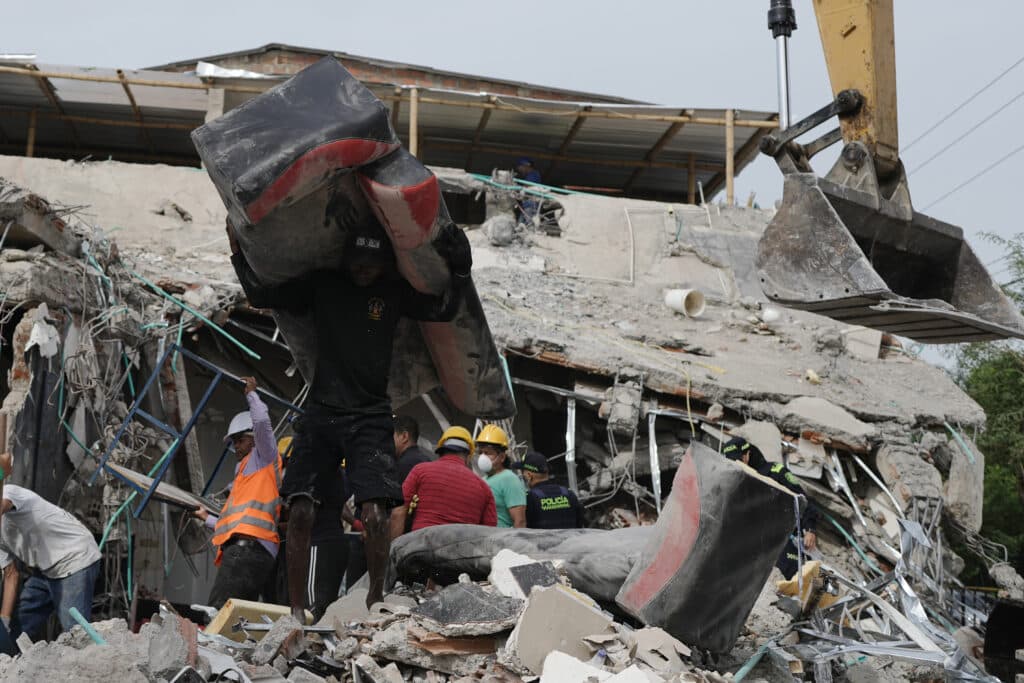
Emergency crews have been working around the clock to locate people trapped beneath collapsed buildings. By Thursday, search operations were entering what officials described as a final phase, with rescuers racing against time to locate survivors.

The large number of people still officially listed as missing means the casualty figures could change further. Search teams are also dealing with damaged roads, disrupted communications and unstable structures, all of which complicate rescue operations.
Authorities have deployed emergency personnel and equipment to some of the worst-hit areas, while local residents have joined professional rescue teams in searching through rubble.
Why Was the Colombia Earthquake So Destructive?
Colombia sits in a highly active seismic region where the Nazca Plate is being forced beneath the South American Plate. This tectonic setting makes western Colombia particularly vulnerable to powerful earthquakes.

The August 10 earthquake occurred deep underground, but its magnitude generated intense shaking over a wide area. Aftershocks have added another danger. Damaged buildings can become significantly more unstable after the initial earthquake, putting both residents and rescuers at risk.
Worst-Hit Regions
The earthquake caused extensive damage in parts of western and central Colombia, including areas around Pereira, Cali, Manizales and Quibdó. Chocó, where the earthquake was centred, has faced particularly difficult conditions because of its geography and infrastructure challenges. Authorities are now assessing hospitals, roads, bridges and public buildings to determine whether they remain structurally safe.
ALSO READ: Colombia Earthquake: Death Toll Crosses 250 as Rescuers Race Against Time
The disaster has triggered a large-scale humanitarian response as authorities begin providing shelter, food, water and medical assistance to displaced residents. The Colombian government is also preparing for a lengthy reconstruction effort involving damaged homes, schools and healthcare facilities. President Abelardo de la Espriella has promised emergency support for affected communities.
For rescuers, however, the immediate priority remains finding survivors. With 496 people still missing, the coming hours could prove crucial. Authorities have warned that the final scale of the tragedy may not become clear until search operations are completed.