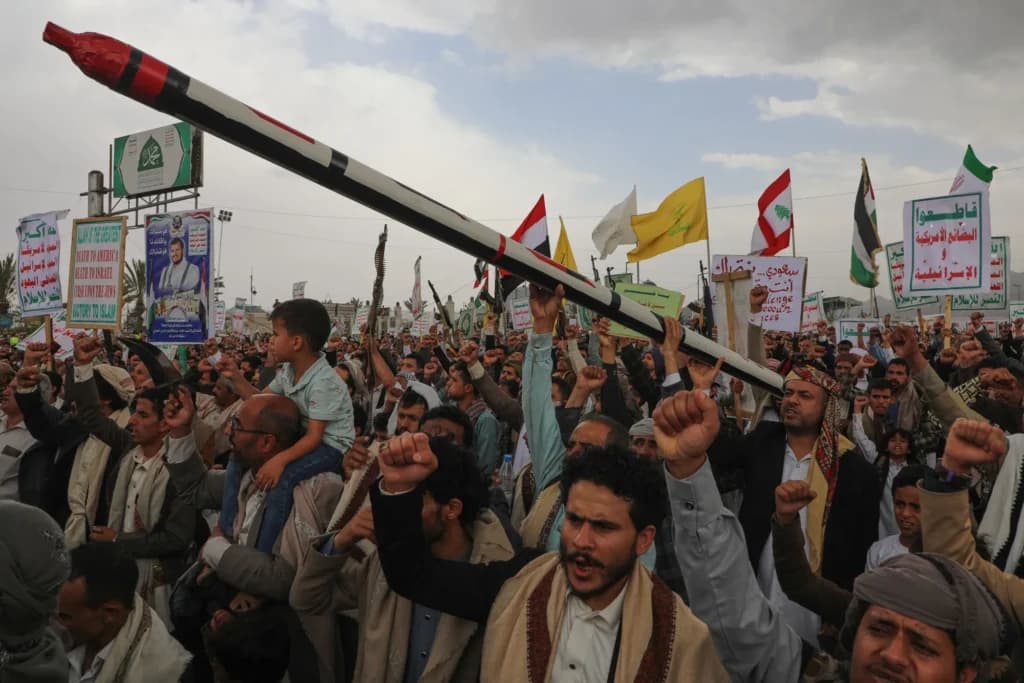
At least 30 Yemeni government troops were killed and more than 50 others injured after Iran-backed Houthi missile attack on military camps in the provinces of Marib and Hadramout on Thursday, August 6. The strikes targeted forces aligned with Yemen’s internationally recognized government and marked one of the deadliest attacks since the country’s fragile ceasefire began to unravel.
According to Yemeni military officials, the Houthis used a combination of ballistic missiles, armed drones, and rocket fire to hit military positions, causing heavy casualties and damaging equipment. The attacks came as government forces were reportedly preparing operations along key frontlines, highlighting the Houthis’ ability to strike deep into government-held territory.

The internationally recognized Yemeni government condemned the attacks as a serious escalation, while the United States also denounced the strikes, calling them a threat to regional stability. The Houthis claimed responsibility, saying the operation targeted military formations backed by the Saudi-led coalition.
The latest escalation has renewed concerns about the security situation across the Middle East. Analysts warn that continued fighting could further destabilize Yemen, threaten Red Sea shipping routes, and complicate diplomatic efforts aimed at ending the years-long conflict. Oil markets also reacted cautiously amid fears that broader regional tensions could disrupt global energy supplies.
Why Marib and Hadramout Matter
Marib remains one of Yemen’s most strategically important provinces because of its vast oil and gas reserves. It also serves as a stronghold for the internationally recognized government and has been the focus of repeated Houthi offensives over the past several years.

Hadramout, Yemen’s largest province, is equally significant due to its energy infrastructure, ports, and military installations. Any deterioration in security there could have wider implications for economic activity and regional stability.
ALSO READ: US Iran War Explodes: Washington Bombs Bridges, Highways and Ports
Houthi Missile Attack Rekindles Fears Of Civil War
Yemen’s civil war began in 2014 when Houthi forces seized the capital, Sanaa, forcing the internationally recognized government to flee. A Saudi-led coalition intervened in 2015 to restore the government, transforming the conflict into one of the Middle East’s longest-running wars.
Although a UN-brokered truce in 2022 significantly reduced large-scale fighting, negotiations have repeatedly stalled. Sporadic clashes, missile launches, and drone attacks have continued, while the Houthis have also expanded attacks linked to wider regional tensions in the Red Sea.
The latest strikes underscore how fragile the security situation remains. With peace talks making little progress and military operations continuing on multiple fronts, observers fear Yemen could be entering another period of intensified conflict with consequences extending far beyond its borders.