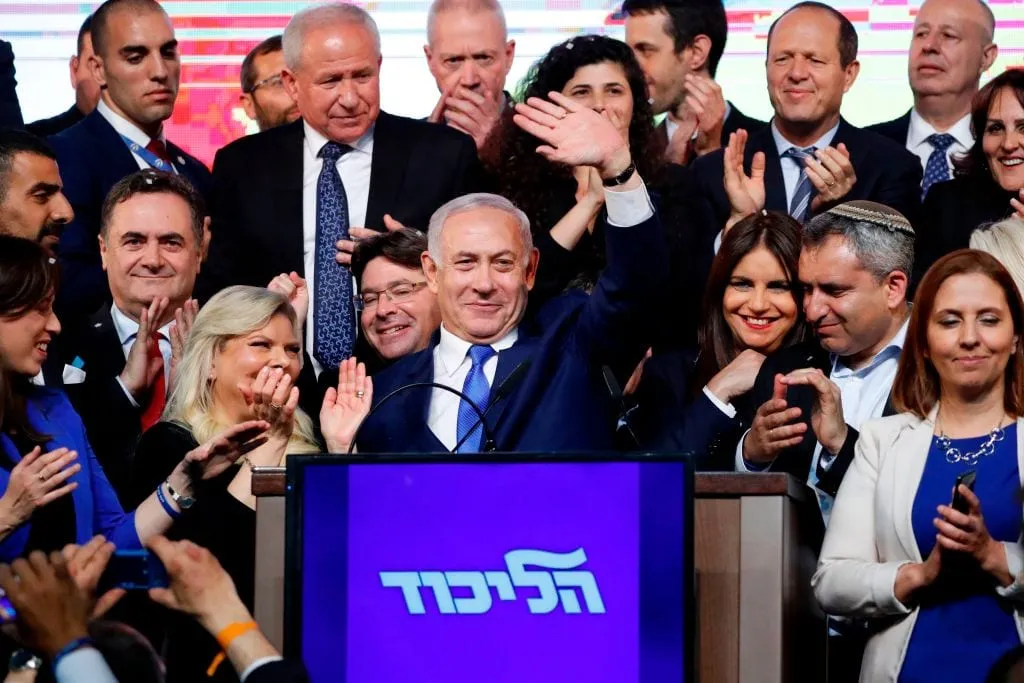
Jerusalem, October 30: Israel faces a period of political uncertainty after the completion of the vote count in the country’s parliamentary election left Prime Minister Benjamin Netanyahu’s bloc and the opposition short of the majority required to form a government.
Final results showed Netanyahu’s right-wing and religious allies securing 53 seats in the 120-member Knesset, while the opposition bloc led by former military chief Gadi Eisenkot won 48 seats. Arab-led parties secured a combined 19 seats, potentially placing them in a crucial position in the negotiations to form the next government. The ruling Likud party emerged as the largest single party with 27 seats, while Eisenkot’s Yashar party secured 21.
What’s Next For Israel?
A coalition requires at least 61 seats in the Knesset, leaving both major political camps with the difficult task of securing support from parties outside their respective blocs. One possible route for the opposition would involve cooperation with Arab-led parties, a politically sensitive arrangement that could provide the numbers needed to challenge Netanyahu’s continued leadership.

However, such an alliance faces significant ideological and political obstacles, with disagreements over security, the Palestinian issue and the role of Arab parties in Israeli politics.
Another possibility is the formation of a broad unity government involving parties from opposing camps. Such an arrangement, however, could prove unstable given the sharp differences that shaped the election campaign.

If negotiations fail, Israel could be headed for another election, extending the country’s political uncertainty.
ALSO READ: Flydubai flight hijacking scare: What exactly happened inside the Israel Bound Plane?
The final results are expected to be formally certified next Wednesday. Israeli President Isaac Herzog will subsequently begin consultations with political parties before assigning a candidate the task of forming a government.
The new Knesset is expected to convene on November 10.
Netanyahu, Israel’s longest-serving prime minister, has faced mounting political and legal challenges, while the election has also exposed the growing influence of Arab-led parties in determining the country’s parliamentary arithmetic.
Fresh reports have also surfaced where the current Israeli PM Netanyahu has pushed for fresh elections despite Israeli President Herzog’s appeal earlier. Herzog had said that parties should work together to avoid a re-election. However, Netanyahu who is unwilling for coalition talks seems to have denied his appeal.