NEW DELHI: India on Tuesday firmly rejected China’s objections to the naming of 28 geographical features and strategic locations in Ladakh, reiterating that the Union Territory is an integral and inalienable part of the country.
The Ministry of External Affairs (MEA) said Beijing’s objections could not change what New Delhi described as the established status of Ladakh. The response followed remarks by China’s Foreign Ministry opposing India’s decision to standardise the names of locations in the strategically sensitive region.
MEA spokesperson Randhir Jaiswal said the standardisation exercise was intended to facilitate the accurate identification of geographical features and improve public awareness. The diplomatic exchange underscores the continuing disagreement between India and China over territorial claims and administrative arrangements along their disputed Himalayan boundary.
What has triggered the latest India-China row?
India announced the standardised names of 28 locations and geographical features in Ladakh on October 2 as part of an official mapping exercise. The locations include strategically sensitive areas along the Line of Actual Control (LAC), including Gogra and Hot Spring, which have figured in previous India-China border tensions.
The exercise was undertaken through the government’s official mapping process, with the authorities saying the names would help improve geographical identification and consistency in official records.

China subsequently objected to the move, describing India’s decision as invalid and reiterating its opposition to the creation of the Union Territory of Ladakh.Beijing has maintained that the relevant areas in the western sector of the India-China boundary belong to China. New Delhi has rejected those claims.
What did China say?
Chinese Foreign Ministry spokesperson Mao Ning said Beijing had never recognised what it described as the Union Territory of Ladakh established by India and opposed the announcement of standardised names for the locations.
China also argued that the naming exercise could not alter what it considers its territorial claims in the western sector of the boundary.

India responded by defending the mapping exercise and reiterating its position on Ladakh’s status.
The latest exchange follows a broader pattern in which both countries have issued competing names for geographical features in disputed border areas. Such announcements are part of a wider diplomatic contest over how the territory is described in official records and represented on maps.
Neither side’s statements, by themselves, alter the physical situation along the border.
Why are Gogra and Hot Spring strategically important?
Gogra and Hot Spring are among the locations along the LAC that have been associated with military friction between Indian and Chinese forces.
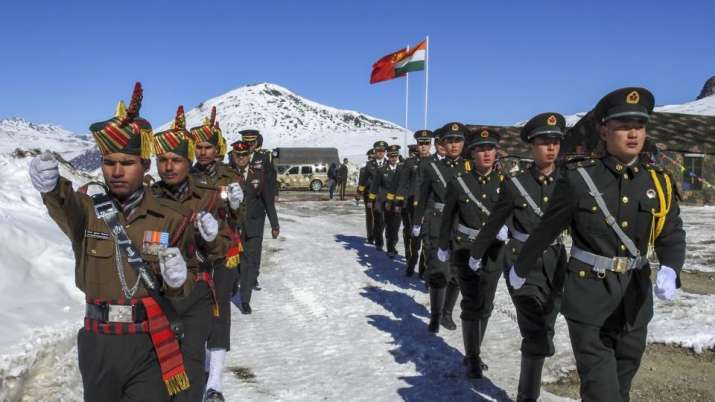
The wider eastern Ladakh confrontation intensified in 2020, leading to prolonged military deployments, diplomatic negotiations and multiple rounds of disengagement discussions. Although the two countries have reached arrangements concerning several friction points, the boundary dispute remains unresolved. Differences over patrolling rights, troop deployments and the interpretation of the LAC continue to shape relations.

The inclusion of sensitive locations in India’s standardised naming exercise therefore gives the announcement significance beyond routine cartographic administration. However, the naming exercise should not be interpreted on its own as evidence of a new military operation or a change in control on the ground.
India-China border dispute remains unresolved
India and China share a long, disputed boundary that stretches across several Himalayan sectors. Both countries maintain competing perceptions of parts of the LAC, and the absence of a mutually delineated boundary has contributed to periodic confrontations.
The 2020 clashes in eastern Ladakh severely strained bilateral relations. Subsequent diplomatic and military talks have sought to manage tensions, facilitate disengagement at selected locations and prevent further escalation.
Despite these efforts, both sides continue to maintain significant military infrastructure and deployments in sensitive areas. India has consistently rejected Chinese territorial claims that it considers incompatible with its sovereignty, while Beijing has repeatedly opposed India’s administrative decisions concerning Ladakh.
The latest naming dispute is another manifestation of these unresolved differences.
ALSO READ: Russia Turns to India for Gasoline as Ukraine Strikes Hit Refineries
What happens next?
The immediate development to watch is whether either side issues further diplomatic statements or raises the matter through bilateral channels.
The dispute could also feature in wider discussions on border management, military disengagement and the restoration of trust between the two countries.For India, the official position remains that Ladakh is an integral part of the country and that the standardisation of geographical names is intended to improve accurate identification.
China’s objections demonstrate that the boundary dispute continues to affect even administrative and cartographic decisions.
The latest exchange is unlikely, by itself, to resolve the wider territorial disagreement. Its significance lies in the continued assertion of competing claims over a strategically sensitive region where military stability and diplomatic engagement remain important to both sides.