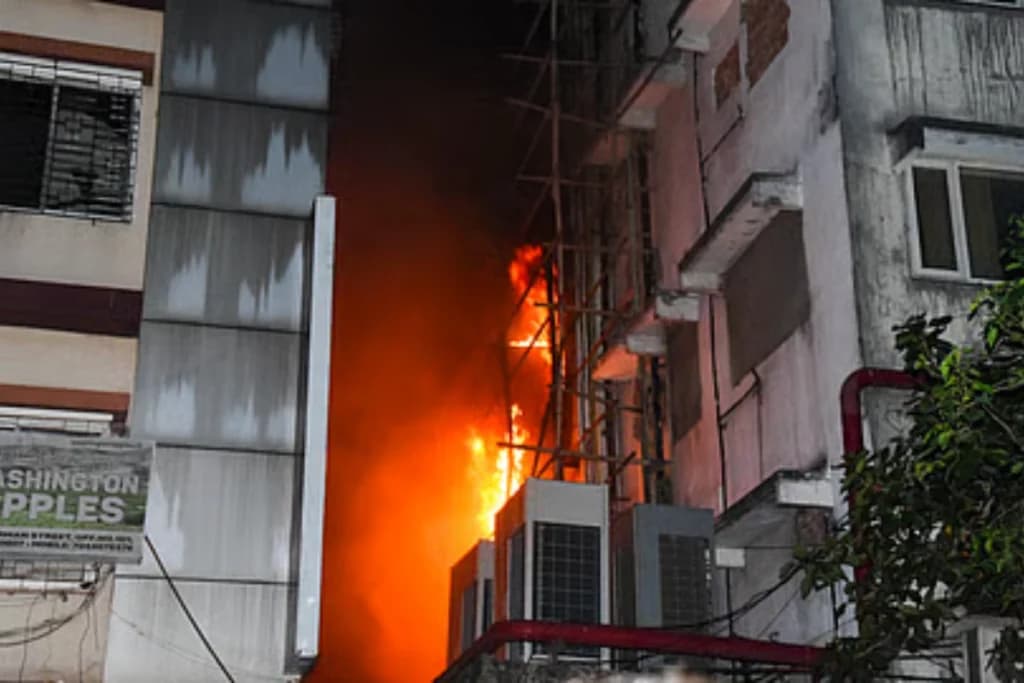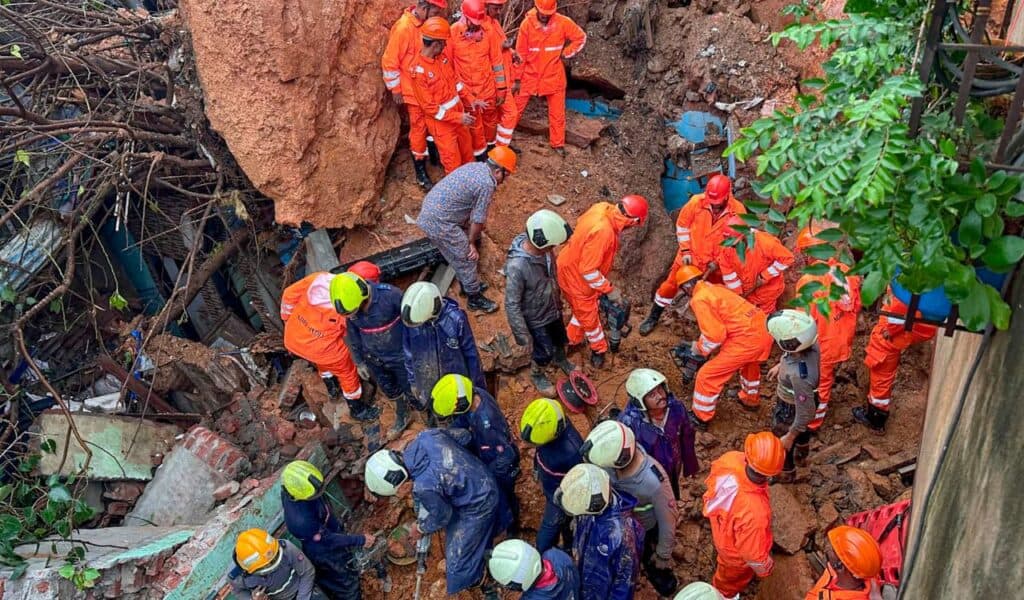
Mumbai Landslide Latest Update: At least seven people, including three children, were killed after a landslide struck a residential area in Ghatkopar, Mumbai, on Wednesday, August 12, as heavy monsoon rainfall continued to batter parts of Maharashtra. Several others were injured and rescue teams were deployed to search through debris for possible survivors.
The landslide occurred in the Chirag Nagar/Ashok Nagar area of Ghatkopar West, where soil and debris from a hillside collapsed onto residential structures. Emergency teams including the National Disaster Response Force (NDRF), Mumbai Fire Brigade and Brihanmumbai Municipal Corporation (BMC) were involved in rescue operations.
The incident has once again highlighted Mumbai’s vulnerability to landslides during the southwest monsoon, particularly in densely populated areas located near hillsides and vulnerable slopes.

Homes Crushed Under Debris After Mumbai Landslide
According to reports, a portion of the hillside gave way and sent mud, rocks and debris onto two to three houses in the settlement. The sudden collapse left residents trapped and prompted an immediate emergency response. Rescue workers had to operate in narrow lanes and unstable conditions while removing debris from the affected structures.
Dozens were innjured, according to some local reports, although casualty figures have varied between initial reports as authorities continued assessing the scene. Officials have warned that rescue operations could remain difficult because additional rainfall may destabilise the slope and increase the risk of further collapses.

Why Mumbai Faces Landslide Risks
Mumbai receives intense rainfall during the southwest monsoon, and short periods of very heavy rain can saturate soil and destabilise slopes. The city’s rapid urbanisation has also resulted in large populations living in areas close to hillsides, embankments and other vulnerable terrain.
Ghatkopar has experienced serious landslide incidents in the past. A major landslide in the area in July 2000 killed 78 people, many of them residents of informal settlements. The latest tragedy therefore comes with a painful historical precedent.
Heavy Rain Across Mumbai
The landslide occurred amid widespread monsoon rainfall across Mumbai and other parts of Maharashtra. The combination of saturated soil, steep terrain and intense rainfall creates conditions in which relatively small slope failures can rapidly become deadly.

Authorities have urged residents living near vulnerable slopes to remain alert and follow evacuation instructions if issued.
ALSO READ: Assam Floods 2026: Death Toll Reaches 98, Why This Year’s Deluge Has Become So Devastating?
Rescue Operation Continues After Mumbai Landslide
Emergency personnel are continuing to search the affected area and assess whether anyone remains trapped beneath the debris. Authorities are also expected to inspect surrounding structures and the hillside itself to determine whether further evacuations are necessary.
The immediate priority is rescuing survivors and providing medical treatment to the injured, but the disaster is likely to renew questions about Mumbai’s monsoon preparedness, hillside construction and the safety of vulnerable settlements. For now, residents in Ghatkopar and other landslide-prone parts of Mumbai remain on alert as heavy rain continues.