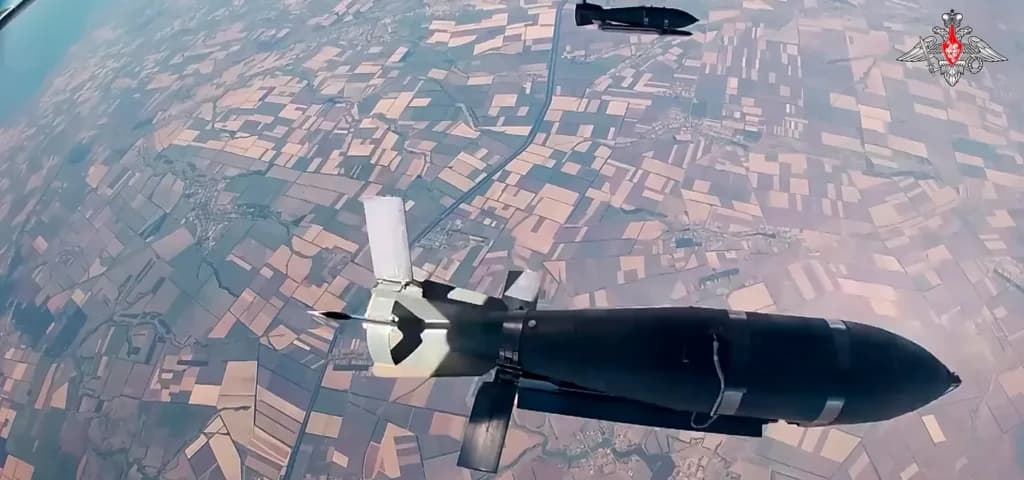
Russia has intensified its use of glide bombs in eastern Ukraine, carrying out fresh waves of airstrikes against Ukrainian defensive positions as Moscow continues its summer offensive. Ukrainian military officials say guided bombs have struck frontline areas in the Donetsk, Kharkiv and Zaporizhzhia regions, damaging military infrastructure and forcing civilians to flee.
Unlike conventional bombs, glide bombs are equipped with navigation kits and folding wings, allowing soviet aircraft to release them from tens of kilometers away while remaining outside the range of many Ukrainian air defense systems. Military analysts say the weapons have become one of Moscow’s most effective battlefield tools over the past year.

The renewed bombardment comes as Ukraine continues long-range drone attacks inside Russian territory, targeting logistics hubs, airfields and military facilities. Both sides have intensified aerial warfare in recent months, with drones and precision-guided weapons playing an increasingly central role in the conflict.
Western officials continue to pledge military support for Kyiv, but Ukrainian commanders have repeatedly warned that additional air defense systems are needed to counter Moscow’s growing arsenal of glide bombs.
What Are Glide Bombs?
Glide bombs are standard aerial bombs upgraded with precision guidance systems and wing kits that enable them to travel long distances after being released by aircraft. They offer high destructive power while reducing the risk to the launching aircraft.

ALSO READ: Russia Launches Massive Missile Attack On Ukraine, 9 Killed Across Kyiv & Other Regions
Background- Russia-Ukraine War
Russia’s full-scale invasion of Ukraine began in February 2022. Since then, the conflict has evolved into a prolonged war of attrition involving missiles, drones, artillery and advanced electronic warfare. Russia accelerated its use of glide bombs in 2024 after adapting older Soviet-era bombs with guidance kits, making them a key component of its air campaign.
The continued use of glide bombs underscores the changing nature of modern warfare, where relatively inexpensive modifications have significantly increased the effectiveness of traditional weapons.