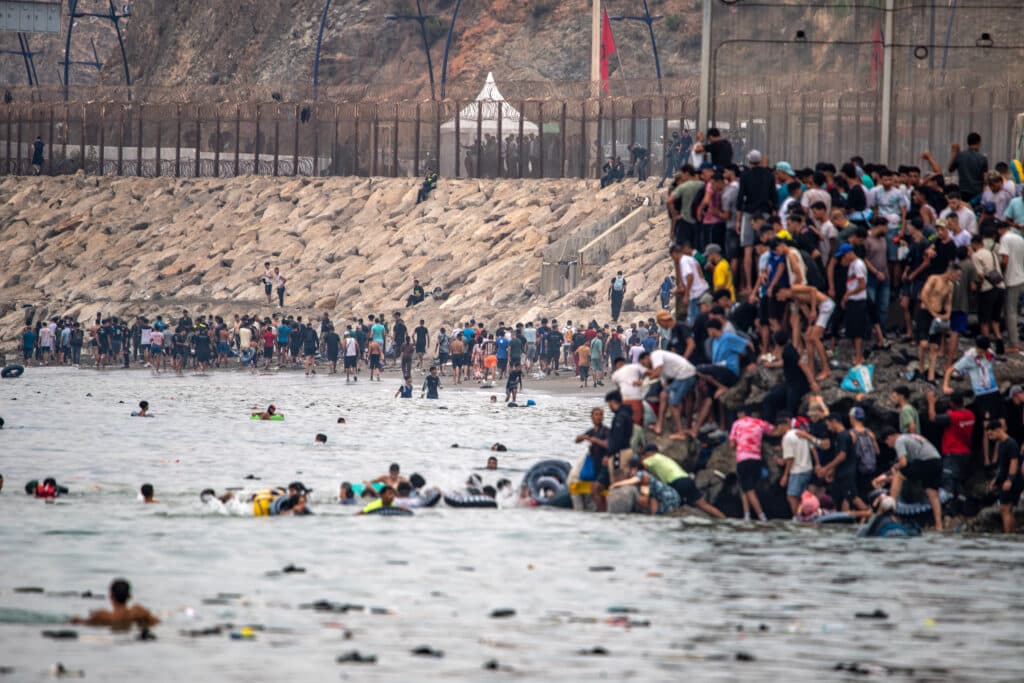
CEUTA, SPAIN: The Spanish North African autonomous city of Ceuta has become the epicenter of a severe humanitarian and border crisis. Over the course of three days in late July 2026, an estimated 60,000 migrants crossed from Morocco into the tiny Spanish enclave. The unprecedented surge overwhelmed local infrastructure and resulted in a tragic loss of life, drawing sharp political scrutiny across the European Union.
The Surge: 60,000 Migrants Breach the Border
Between Wednesday, July 29, and Friday, July 31, 2026, a massive wave of migrants—predominantly young men of Moroccan descent, alongside some Algerian nationals, families, and unaccompanied minors—breached the border separating Morocco from Ceuta. The majority of the migrants bypassed the physical border fences by either swimming around the Tarajal and Benzú breakwaters or by simply crossing on foot along the shoreline.

The scale of the influx drastically overshadowed previous incidents. For context, the last major border breach in May 2021 saw roughly 12,000 migrants enter Ceuta over two days. The sudden arrival of approximately 60,000 people placed an immense strain on Ceuta, a city with a population of just 84,000.
Local reception facilities were immediately overwhelmed. Ceuta’s mayor-president, Juan Jesús Vivas, reported that facilities intended for unaccompanied foreign minors were operating at an astonishing 2,400% of their normal capacity. Thousands of adults were left without accommodation, forcing them to sleep on the streets, while Vivas’ request for the Spanish government to declare a national emergency was denied by the Interior Ministry.
ALSO READ: US Iran War Explodes: Washington Bombs Bridges, Highways and Ports
Tragedy at the Breakwater: Death Toll Reaches 67
The chaotic rush to enter Spanish territory has proven deadly. On Saturday, August 1, 2026, the Spanish government confirmed that the death toll related to the crisis had climbed to 67.

The fatalities occurred under horrifying circumstances. Authorities reported that several individuals drowned while attempting the treacherous swim around the sea barriers. Further casualties resulted from a stampede as desperate crowds attempted to cross a breakwater barrier, crushing those caught in the ensuing panic. Rachid Sbihi, who represents Civil Guard officers, described the chaotic scene as a “serious humanitarian crisis”.
In response to the breaches and the loss of life, Spain announced the installation of a new 500-meter-long containment barrier extending along the breakwater fence directly into the sea to deter further crossings.
Returns and the Role of Morocco
By Saturday morning, the situation in Ceuta began to stabilize, though an “uneasy calm” persisted over the bruised city. Spain’s Interior Minister Fernando Grande-Marlaska stated that “almost all” of the migrants who entered during the surge have already left, returning across the border to Morocco. By July 31, officials estimated that about 50,000 individuals had returned voluntarily.

Soldiers deployed to the Tarajal beach were seen intercepting exhausted migrants arriving by sea and immediately escorting them back across the frontier. However, some determined migrants remain hiding within the enclave. Mohamed Hatri, a 23-year-old Moroccan, stated, “They’ve closed everything down so that we can’t buy anything to eat, to force us to return… But even if they close it down… we’re bound to stay here, whether we’re hungry or not”.
The suddenness and scale of the crossing have raised serious questions about the role of Moroccan authorities. Ignacio Cembrero, a Spanish journalist specializing in North African migration, observed that Moroccan security forces appeared to be “sitting on their hands” since the surge began, deliberately allowing the massive crowds to bypass the police cordons that normally guard the breakwater.
Political Fallout and Root Causes
The crisis has rapidly escalated into a major political battle. Right-wing politicians in Spain and across Europe have seized upon the chaotic scenes in Ceuta as evidence of weak EU border management.
While the exact trigger for Morocco allowing the sudden influx remains unclear, analysts suggest a potential link to a recent legal development in Spain. On July 8, Spain’s Supreme Court ruled that migrants arriving by sea could not be returned as quickly as those arriving by land. Some speculate that criminal smuggling networks, or even Moroccan authorities, manipulated this ruling to test Spain’s border enforcement capabilities. Spanish Prime Minister Pedro Sanchez is expected to visit Ceuta to address the ongoing crisis and border security concerns.