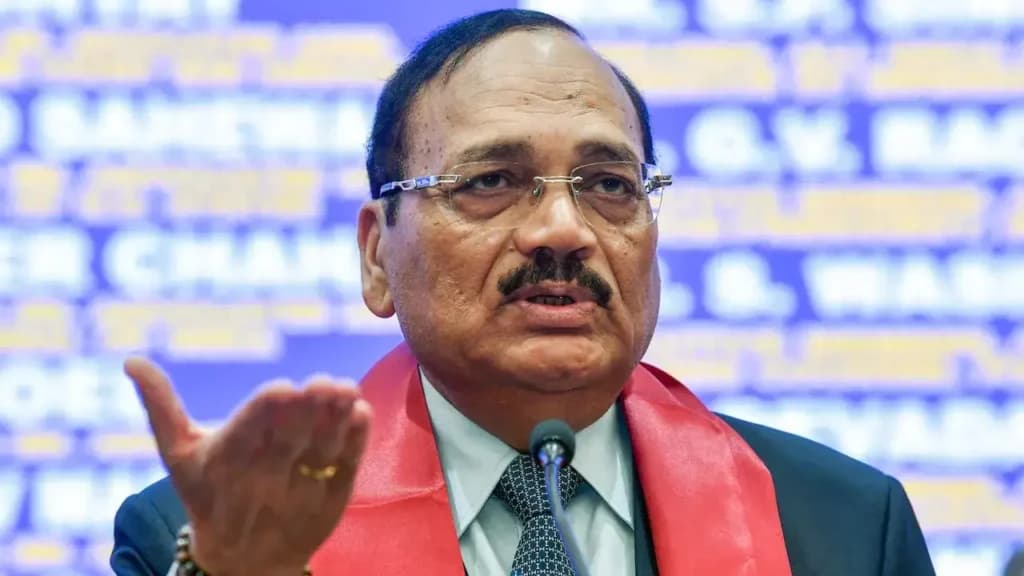
The Supreme Court of India delivered a crucial clarification on Monday, August 3, 2026, regarding its earlier directives on the handling of First Information Reports (FIRs) filed against individuals involved in the NEET-UG paper leak protests. The clarification came after a Bench headed by Chief Justice of India (CJI) Surya Kant found that clauses in its July 28 interim order were being misunderstood by some authorities and protesting groups.
The initial July 28 directive had restrained authorities from taking coercive action against “protesting students” who did not possess “criminal antecedents” while permitting the NCT of Delhi and other states to proceed with the investigation of the registered FIRs.

This led to contentions from the Cockroach Janta Party (CJP), which spearheaded the protests, arguing that allowing investigations to proceed contradicted the Centre’s assurance of granting amnesty to the protesters. In response, the Supreme Court firmly clarified that its order does not prevent the NCT of Delhi or any other state government from taking lawful steps to close or withdraw criminal cases against the students.
Furthermore, the Court addressed the ambiguity surrounding the term “criminal antecedents.” Responding to submissions by Senior Advocate A.M. Singhvi, the Court explicitly ordered that this term must be strictly interpreted as involvement in “grave and heinous offences”. This critical definition ensures that students with minor or petty infractions on their record are not disqualified from receiving relief from prosecution.
Supreme Court CJI Kant Directs Authorities To Segregate FIRs
CJI Kant directed Union and state authorities to segregate the pending FIRs into two distinct categories: those concerning genuine student protesters and those involving “hardened criminals” who may have infiltrated the peaceful demonstrations to incite violence.

Justice Joymalya Bagchi, part of the Bench alongside Justice V. Mohana, observed that the architecture of criminal law provides for the withdrawal of prosecution or the filing of closure reports by Public Prosecutors. He emphasized that these pending FIRs should not remain an ongoing threat hanging over the heads of young students.
Solicitor General Tushar Mehta, representing the Union government and the Delhi Police, assured the Court that the government was adopting a “non-adversarial stance” toward the students but maintained that relief would not extend to individuals with genuine criminal antecedents.

The Court also took up related matters during the hearing. It indicated an inclination to establish a uniform protocol governing the deployment of pellet guns for crowd control, specifying the “exceptional circumstances” under which such force could be used. Additionally, the Court emphasized that injuries suffered by on-duty police personnel during the nationwide protests are of equal concern alongside allegations of police excesses.
ALSO READ: Supreme Court Observes Pellet Guns May Be Used in ‘Exceptional Circumstances’
The Bench also agreed to list an intervention application from food volunteer Junaid Malik, who alleged he was illegally abducted and abandoned by police for managing food stalls at a protest site. The matter has been listed for further hearing on August 18, 2026.