The INDIA bloc’s planned march to the Election Commission headquarters in New Delhi on Tuesday, October 6, turned into a prolonged standoff after police stopped opposition MPs from proceeding towards Nirvachan Sadan.
The protest was organised over opposition parties’ objections to the Election Commission’s Special Intensive Revision (SIR) of electoral rolls and their demand for the resignation of Chief Election Commissioner Gyanesh Kumar.
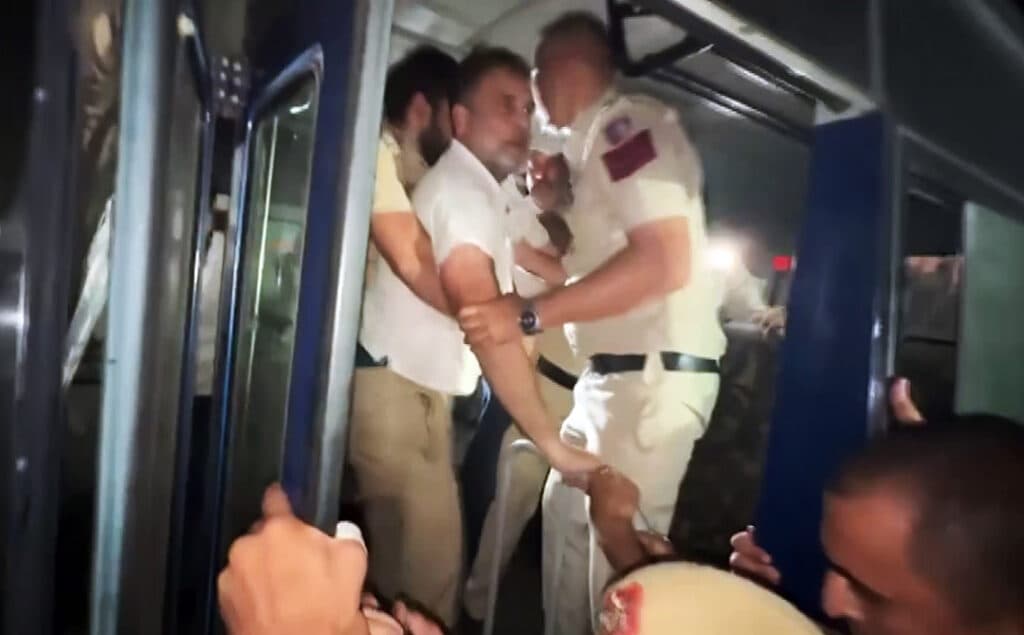
The day’s events eventually culminated in the detention of Congress leader and Lok Sabha Leader of Opposition Rahul Gandhi, Congress MP Priyanka Gandhi Vadra and other opposition leaders after a nearly nine-hour sit-in at Akashvani Bhawan.

But Rahul Gandhi’s detention came only after a series of developments that began with the INDIA bloc’s march from Parliament.
Why did the INDIA bloc march to the Election Commission?
The October 6 march was part of an action plan announced by opposition parties last week. The INDIA bloc had announced protests from October 2 to 8 over allegations concerning electoral rolls and the functioning of the Election Commission. As part of that programme, opposition MPs from both Houses were scheduled to march from Parliament to the Election Commission headquarters on October 6.
The opposition’s principal demands included action over alleged irregularities in the SIR exercise and the resignation of CEC Gyanesh Kumar.
The Election Commission has defended the electoral-roll revision process, while opposition parties have continued to raise questions about the deletion and verification of voter names.
Rahul Gandhi, Kharge and opposition MPs begin the march
Rahul Gandhi joined Congress president Mallikarjun Kharge, Priyanka Gandhi Vadra and other INDIA bloc MPs for the march from the Parliament complex. Opposition MPs carried placards and raised slogans against the Election Commission and CEC Gyanesh Kumar.
The march proceeded towards the Election Commission but was stopped on Parliament Street near the NITI Aayog office and Akashvani Bhawan. According to reports, the police had blocked the route towards Nirvachan Sadan with barricades.
Protesters sit on the road after police stop march
Once the march was halted, several opposition MPs sat on the road in protest.The situation then became more dramatic. Rahul Gandhi climbed onto a police barricade and waved the Tricolour while opposition MPs continued raising slogans. Trinamool Congress MP Abhishek Banerjee was also seen climbing the barricade.
At the same time, police began detaining several opposition leaders. Among those detained during the initial phase were Priyanka Gandhi Vadra, Samajwadi Party chief Akhilesh Yadav, TMC leaders Abhishek Banerjee and Derek O’Brien and other opposition MPs.
For a brief period, it appeared that the march had effectively ended. Then Rahul Gandhi made an unexpected move.
Rahul Gandhi enters Akashvani Bhawan
While other opposition leaders were being moved into buses, Rahul Gandhi remained at the protest site. According to reports, he spoke to Priyanka Gandhi, who was inside a police vehicle, before moving towards the reception entrance of Akashvani Bhawan.
The building is located very close to the Election Commission headquarters. Rahul Gandhi entered the Akashvani Bhawan premises despite efforts to prevent access. Priyanka Gandhi, who had initially been taken towards a waiting bus, later got off and joined her brother at the Akashvani gate.

The development changed the nature of the protest from a road blockade into a sit-in inside the Akashvani complex.
Why did Rahul Gandhi stay inside Akashvani Bhawan?
Rahul Gandhi and other opposition leaders said they wanted to reach the Election Commission and meet the poll officials. From inside the premises, Gandhi said the protesters were prepared to remain there until they were allowed to meet the Election Commissioners.
He also said the opposition wanted to raise its concerns about what it described as “vote theft” and alleged irregularities in the SIR process. These were political allegations made by Gandhi and the opposition, rather than established findings. Police personnel repeatedly asked the protesters to vacate the premises. The protesters, however, refused to leave and continued their sit-in.
ALSO READ: Rahul Gandhi Dharna: Delhi Police Files FIR After Pellet-Gun Row
More opposition leaders join the sit-in
As the standoff continued, more Congress leaders reached the Akashvani Bhawan premises. Congress general secretary K C Venugopal, Rajya Sabha MP Pawan Khera, Deepender Hooda and other leaders joined Rahul and Priyanka Gandhi.

Some opposition MPs who had initially been detained were later released and returned to the protest site. The sit-in consequently continued for several hours.
Rahul Gandhi says protesters will stay
As the hours passed, Gandhi made it clear that the protesters did not intend to leave immediately. He said the group was comfortable at the site and would remain there until its demand for a meeting with the Election Commission was addressed.
The protest therefore turned into a prolonged standoff between the opposition leaders and Delhi Police. Meanwhile, security personnel remained deployed around the premises.
Why was Rahul Gandhi finally detained?
After approximately nine hours, Delhi Police moved to clear the protesters from the Akashvani Bhawan premises. According to reports, police had asked the leaders to leave, but the protesters continued their sit-in.
Police subsequently detained Rahul Gandhi, Priyanka Gandhi and other opposition leaders and moved them away from the site in buses. The detention brought the day’s protest to an end.
Reuters also reported that opposition lawmakers, including Rahul and Priyanka Gandhi, were detained during the demonstration after protesters attempted to move past police barricades.
What were the opposition’s main demands?
The protest centred on several issues linked to the Election Commission.
The INDIA bloc has demanded:
- Resignation of CEC Gyanesh Kumar
- Greater transparency in the SIR exercise
- Action over alleged voter-list irregularities
- A meeting between opposition MPs and Election Commissioners
- Protection of voters’ rights
- Wider electoral reforms
The opposition has alleged that the SIR process could result in eligible voters being removed from electoral rolls.
The Election Commission has maintained that electoral-roll revision is part of its constitutional responsibility.
BJP responds to INDIA bloc protest
The BJP criticised the opposition’s protest and accused Congress and its allies of repeatedly targeting constitutional institutions. Union ministers and BJP leaders described the protest as political theatre and rejected the opposition’s allegations against the Election Commission.
The contrasting positions underline the continuing political dispute over SIR and the Election Commission.
What happened after Rahul Gandhi’s detention?
The detention ended the immediate standoff at Akashvani Bhawan, but the wider political confrontation is expected to continue.
The INDIA bloc had already announced a broader campaign running through October, including protests and public outreach programmes.
The opposition has also announced plans for a November 1 rally at Ramlila Maidan as part of its wider campaign on electoral issues.
Meanwhile, the Election Commission remains at the centre of the dispute over SIR and electoral-roll revisions.