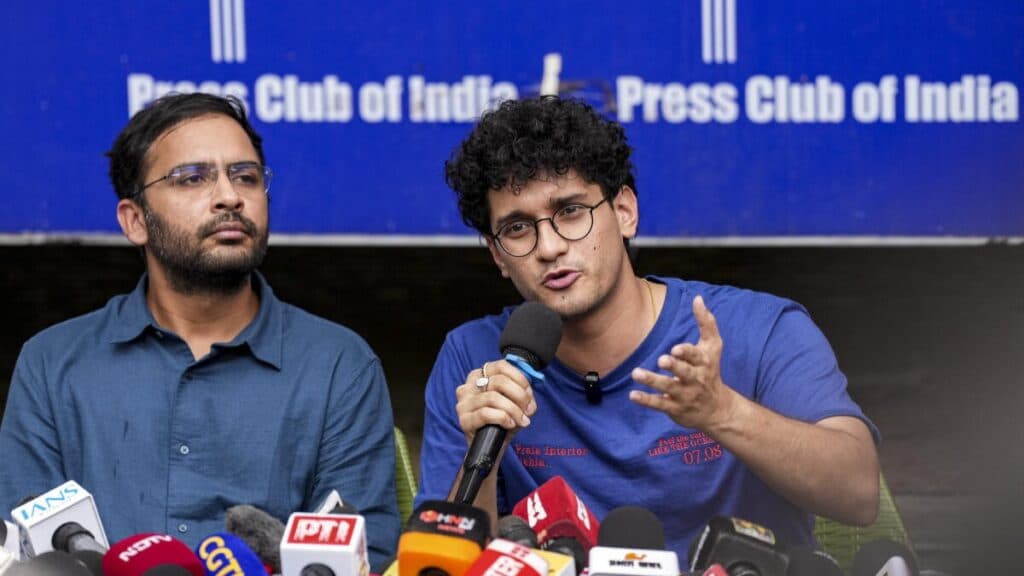
New Delhi, October 21, 2026: Cockroach Janata Party (CJP) leaders Saurav Das and Ashutosh Ranka were released from Tihar Jail on Wednesday evening after spending seven days in judicial custody. Their release followed a written undertaking before a Special Executive Magistrate (SEM) promising not to call for protests at Jantar Mantar until the site is legally notified again for demonstrations.
The two leaders also furnished personal bonds and surety bonds of ₹50,000 each and undertook to maintain peace and tranquillity. In their written undertaking, they said any future protests would be conducted within the constitutional framework.
Why were Saurav Das and Ashutosh Ranka detained?
Das and Ranka were taken into custody following allegations that they entered the Jantar Mantar protest area despite restrictions and violated earlier peace bonds. They had previously been detained at Delhi airport on October 10 and were required to furnish bonds promising to maintain peace and good behaviour.
They were subsequently remanded to five days of judicial custody on October 14. Their custody was extended by two days on October 19, bringing the total period to seven days.

The case arose amid protests organised by CJP and associated groups over the Special Intensive Revision (SIR) of electoral rolls and their demand for the resignation of Chief Election Commissioner Gyanesh Kumar.
Delhi High Court declines to intervene in custody proceedings
The Delhi High Court on Wednesday declined to interfere with the custody proceedings, questioning the leaders over the alleged breach of a peace bond they had furnished earlier. The court allowed them to withdraw their pleas challenging the proceedings and indicated that they could pursue the appropriate alternative legal remedy.
The release order was subsequently issued by the Special Executive Magistrate after the required undertakings and surety formalities were completed.
What is the CJP protesting against?
CJP has been at the forefront of protests concerning electoral-roll revisions and allegations of irregularities in the voter-list process. Critics of the revision have raised concerns about the removal of voters from electoral rolls, while the Election Commission has defended the process and maintained that eligible voters can take steps to re-enrol.

The movement has called for the resignation of Chief Election Commissioner Gyanesh Kumar. The dispute has also raised questions about the limits of preventive police action, restrictions on demonstrations and the right to peaceful protest.
ALSO READ: CJP leaders released after detention, movement calls fresh Jantar Mantar protest
What happens next?
Das and Ranka’s release does not mean that their political campaign has ended. Their written undertaking places a specific condition on calls for demonstrations at Jantar Mantar until the site is lawfully de-notified from its current restricted status. Any future protest would also have to comply with applicable law and constitutional requirements.
The CJP leaders’ release comes amid a wider debate over electoral reforms, the regulation of protest sites and the use of preventive measures against demonstrators.
The key development: Saurav Das and Ashutosh Ranka were released after seven days in custody, subject to written undertakings and bonds. Their release is not, by itself, a ruling on the wider allegations surrounding the electoral-roll revision.