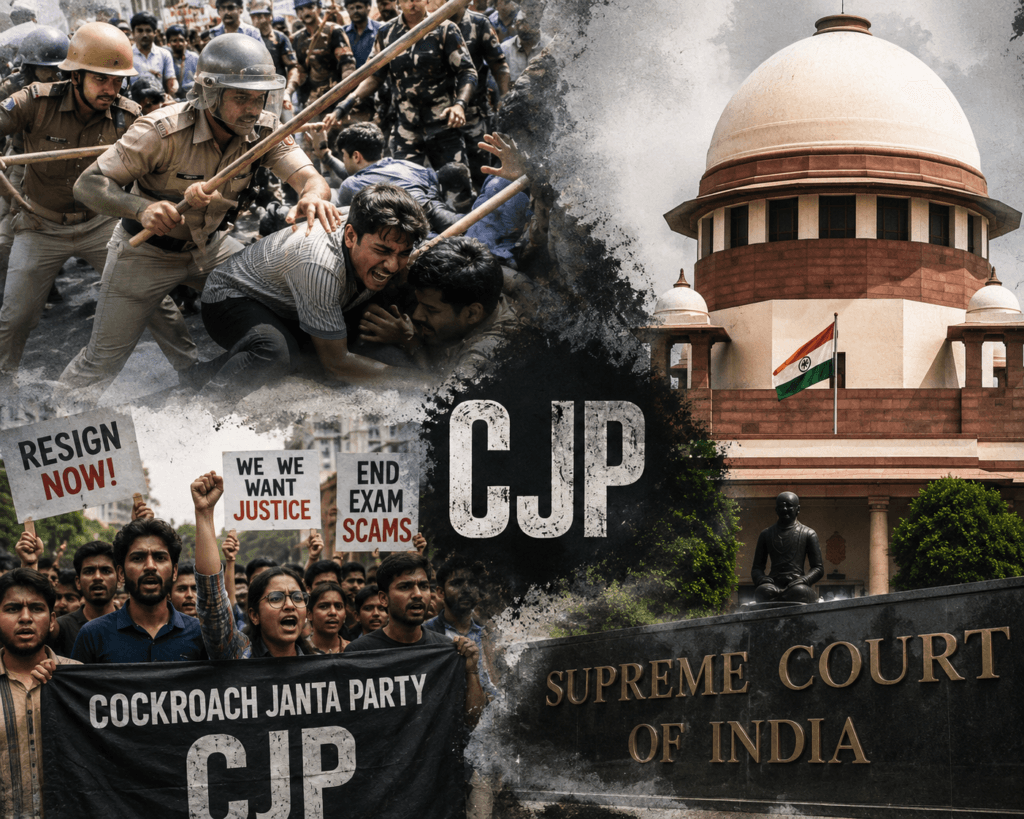
NEW DELHI: In a major judicial development regarding the ongoing youth protests in the capital, the Supreme Court of India has refused to intervene directly in the escalating conflict between law enforcement and demonstrating students. On Wednesday, July 22, 2026, Chief Justice of India (CJI) Surya Kant officially declined to initiate suo motu proceedings to take cognisance of the alleged police excesses and brutality during the massive July 20 crackdown on the Cockroach Janta Party (CJP) protesters.

Supreme Court Refuses To Watch Video Evidence
The request for Supreme Court intervention was brought forward by a lawyer who argued that there was overwhelming videographic evidence depicting severe police brutality and the use of excessive force against unarmed students attempting to march to Parliament.

However, CJI Surya Kant firmly rebuffed the submission. In a highly consequential oral remark, the Chief Justice declined to even examine the provided video footage, stating bluntly that the apex court’s time should not be “wasted” on the matter. This refusal to intervene suo motu forces the protesting groups and injured students to pursue lengthy, standard legal channels if they wish to seek judicial accountability for the alleged use of shock batons and pellet guns by security personnel.
ALSO READ: Parliament Monsoon Session Disrupted for Third Consecutive Day Over NEET Protests
Delhi Police File Multiple FIRs
While the Supreme Court stepped back, the Delhi Police aggressively moved forward with punitive legal measures against the organizers of the “Chalo Sansad” march. On Tuesday, law enforcement officially registered four First Information Reports (FIRs) against unknown individuals. The charges levied in the FIRs are incredibly severe, encompassing rioting, assault on public servants, and massive damage to public property.

Additional Deputy Commissioner of Police (ADCP) Anand Kumar Mishra addressed the media regarding the legal actions, stating that a comprehensive investigation is currently underway. He noted that investigators are specifically trying to determine whether the entire violent confrontation was “premeditated and executed in an organised, coordinated” manner by the CJP leadership.
Simultaneously, the Delhi High Court sought a formal response from both the Central Government and the Delhi Police regarding petitions highlighting the use of “excessive force” during the July 20 march. The High Court directed the police to securely preserve all records related to the incident, including CCTV footage and videography, strictly following established standard operating procedures. As a security precaution, the Delhi Metro Rail Corporation (DMRC) also closed at least 16 key metro stations on Wednesday morning.