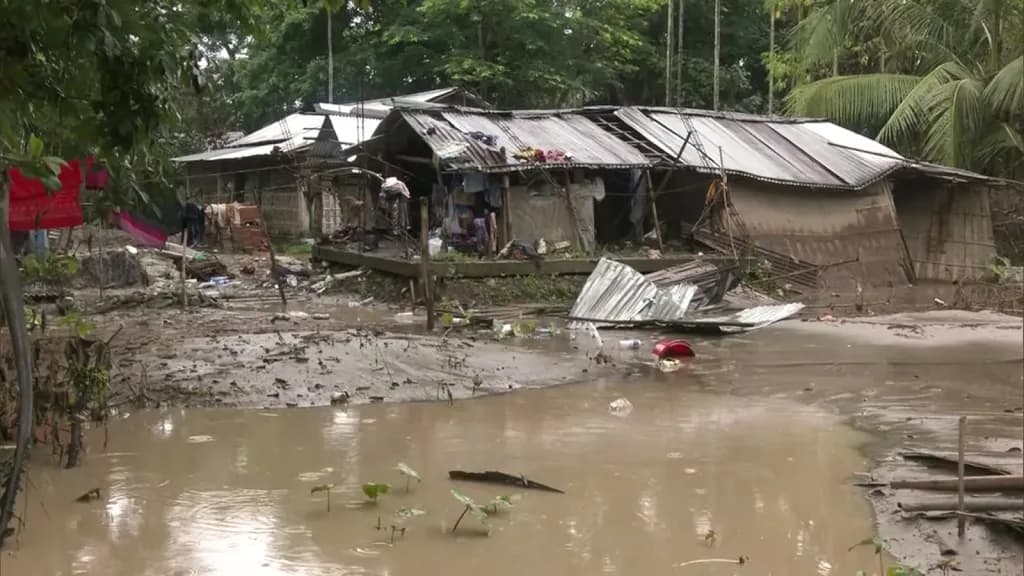
Assam’s 2026 flood crisis has emerged as one of the state’s most severe recent disasters, with dozens of people killed and hundreds of thousands affected during the July flooding.By late July, reports indicated that the death toll had reached at least 66, while nearly seven lakh people had been affected across the state. Upper Assam districts including Sivasagar, Charaideo and Jorhat were among the worst-hit areas.
Residents described water levels rarely seen in their lifetimes, while swollen rivers inundated homes, roads and agricultural land.
Why Was the Flooding So Severe?
Heavy rainfall was the immediate trigger, but experts and local reporting point to several contributing factors.The Brahmaputra and its tributaries form an enormous river network across Assam. When intense rainfall occurs across the catchment areas, rivers can rise rapidly and overwhelm floodplains.
Climate change is also increasingly being linked to more intense rainfall events, although individual floods cannot automatically be attributed solely to climate change.

Human activity can make the consequences worse. Deforestation, excavation, changes in drainage and pressure on natural wetlands can reduce the landscape’s ability to absorb and manage excess water.
Upper Assam Bears the Brunt
Sivasagar, Charaideo and Jorhat experienced particularly severe flooding.
At one stage, multiple rivers—including the Dikhow, Disang and Dhansiri—were reported to be above danger levels. The situation deteriorated rapidly, with 21 people reported killed in a single 24-hour period during the peak of the crisis.
Rescue teams were deployed with boats, while thousands of people were moved into relief camps.
Why Assam Is So Vulnerable
Assam has a naturally high exposure to floods. Government data says around 39.58% of the state’s land area is flood-prone, significantly higher than the national proportion. Riverbank erosion is another major problem. Assam’s Water Resources Department says approximately 4.27 lakh hectares have been eroded by rivers since 1950.

This means flooding does not simply destroy crops and homes temporarily. Repeated erosion can permanently alter villages, farmland and river islands.
What Happens Next?
Flood recovery in Assam is likely to extend well beyond the immediate emergency.
Authorities must simultaneously manage evacuation, health risks, damaged roads and bridges, agricultural losses and riverbank erosion.
The crisis has also renewed questions about whether Assam’s flood-management strategy needs to place greater emphasis on early warning systems, wetlands, drainage and long-term river management rather than relying primarily on embankments and emergency relief.
For millions living along Assam’s river systems, the challenge is no longer simply surviving one flood season—it is adapting to a landscape where extreme flooding and erosion remain recurring threats.