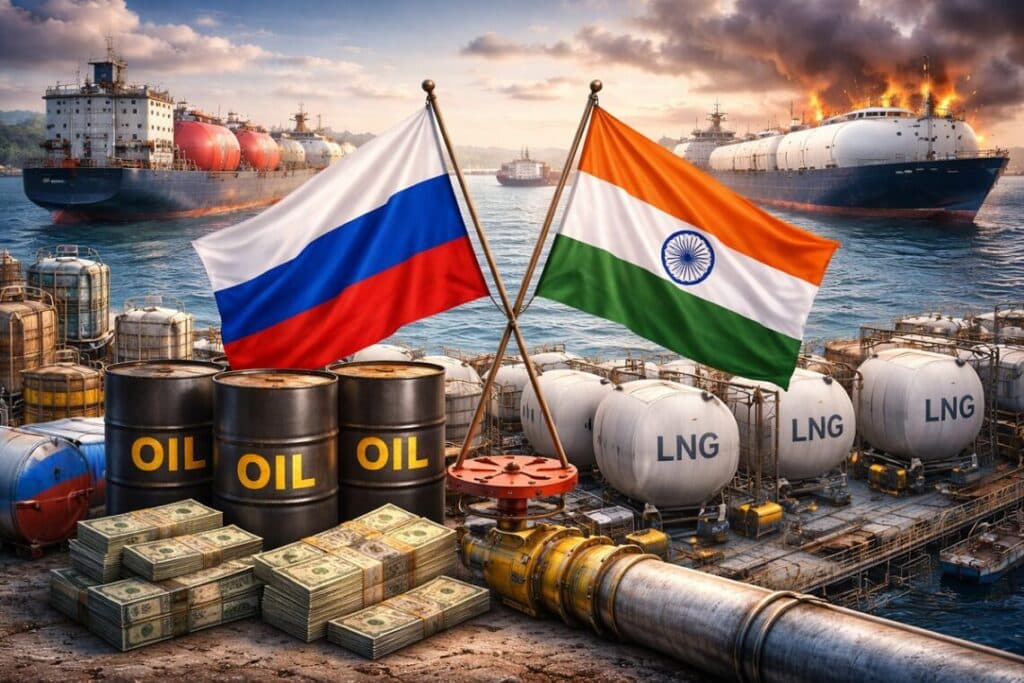
Russia has begun importing gasoline from India as repeated Ukrainian drone attacks on its oil refineries disrupt domestic fuel supplies and push Moscow to seek additional sources of refined petroleum products.
A shipment of around 68,000 metric tonnes of gasoline from India has reached Moscow’s Arctic port of Vitino, according to Reuters, with the fuel now being transported by rail for distribution inside the country. At least two more Indian gasoline shipments are expected to arrive at Russian ports within the next two weeks, according to shipping data.
The development is significant because the nation is itself one of the world’s major oil producers and historically a major exporter of refined petroleum products.
Why Is Russia Buying Fuel From India?
Moscow’s domestic fuel market has come under increasing pressure following Ukrainian attacks on its oil-refining infrastructure. Drone strikes have damaged or disrupted multiple oil refineries, reducing the country’s ability to turn crude oil into gasoline and diesel for domestic consumers.
Moscow has responded with several emergency measures, including a ban on fuel exports and imports of gasoline by rail from neighbouring Belarus and Kazakhstan. Russia has also begun sourcing diesel from Asia for its Far Eastern markets.

The arrival of Indian gasoline shows that the problem is becoming significant enough for Russia to look beyond its immediate neighbours.
How Did the Indian Fuel Reach Russia?
The gasoline was loaded at Vadinar port in Gujarat, home to the Nayara Energy refinery. The shipment was transferred during its journey before reaching Russia’s Arctic port of Vitino. Once discharged, the fuel is being transported inland by rail for domestic use.

The route demonstrates how the Russia-Ukraine war has created increasingly complicated energy supply chains, with refined fuel travelling long distances to compensate for damaged domestic infrastructure.
India’s Unexpected Role
India has become one of Moscow’s most important energy partners since Western sanctions disrupted its traditional European oil markets. Indian refiners have significantly increased their role in global petroleum trading by processing crude into fuels and exporting refined products to markets around the world.
ALSO READ: India Russian Oil Imports Hit Record 48% Amid US Tariff Threat
The latest shipments represent an unusual reversal: Russia, a major oil producer, is now importing finished gasoline from India because its own refining capacity is under pressure. This could become an increasingly important part of the energy relationship between the two countries if Russian refinery disruptions continue.
Ukraine’s New Energy Strategy
Ukraine has increasingly targeted Russian energy infrastructure with long-range drone attacks. The strategy aims to disrupt fuel production, logistics and revenue generation deep inside Russian territory rather than concentrating exclusively on battlefield positions.
Refinery attacks can have an immediate economic impact because even when Russia continues producing crude oil, damaged refining capacity can create shortages of the fuels needed by consumers, transport companies and the military.
What Happens Next?
Moscow is likely to continue using a combination of domestic production, emergency imports and restrictions on exports to stabilize its fuel market. For India, additional Russian demand could provide opportunities for its large refining industry.
But the development also highlights how deeply the Russia-Ukraine war is reshaping the global energy trade. The irony is striking: Moscow has abundant crude oil, but damage to its refineries is forcing it to import gasoline from India.
If Ukrainian attacks continue hitting Putin’s refining infrastructure, more international fuel shipments could become necessary in the coming weeks.