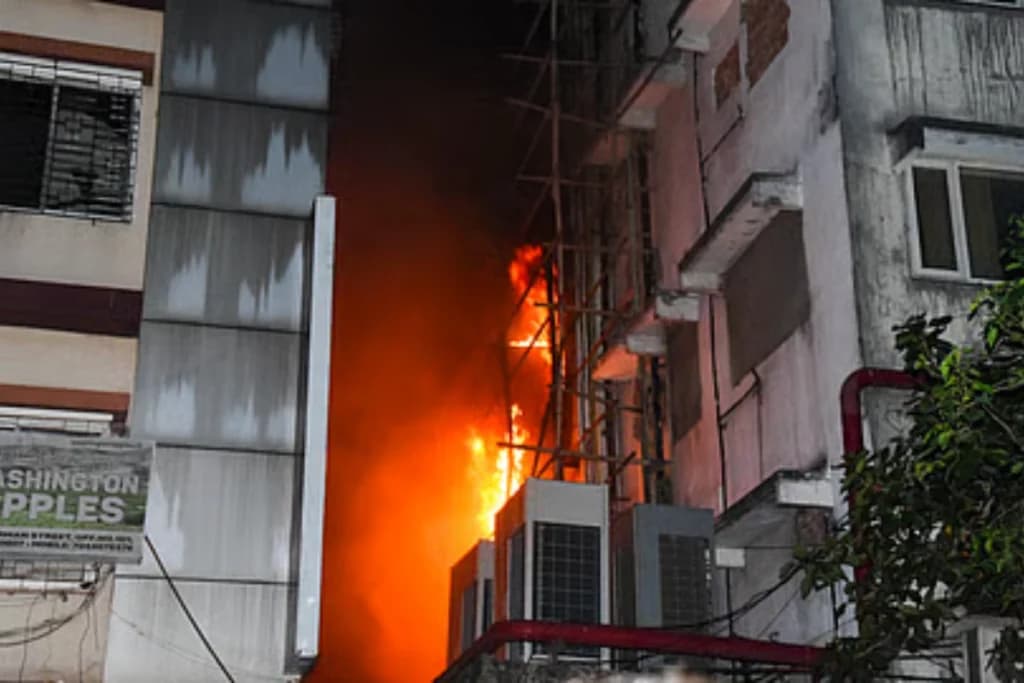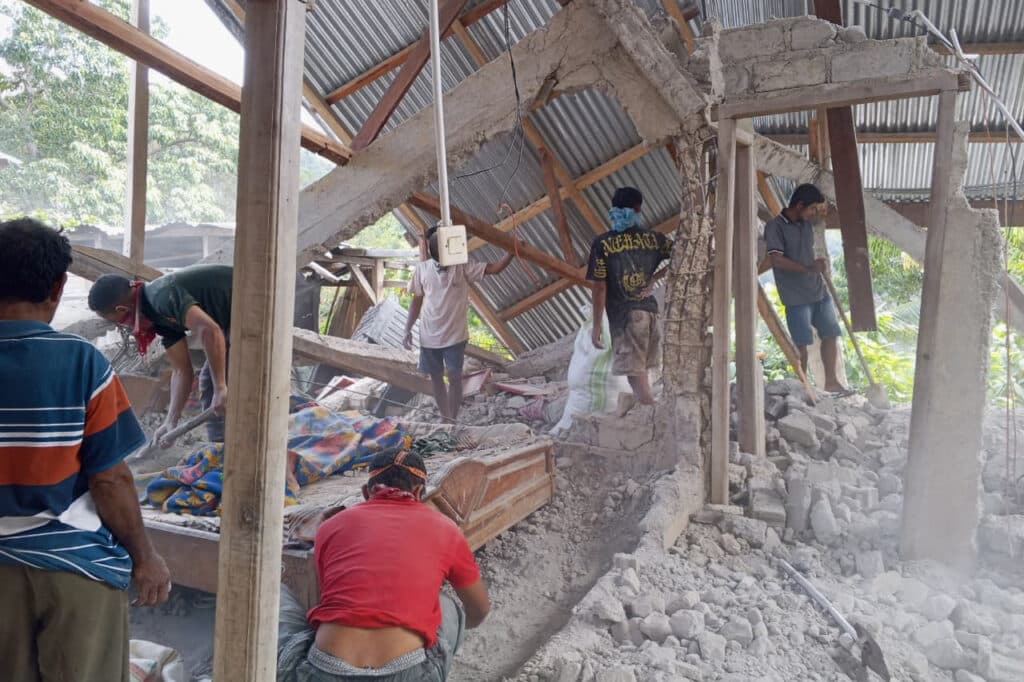
A powerful 7.7-magnitude earthquake struck eastern Indonesia early Saturday, August 15, killing at least 38 people and injuring others as rescue teams searched through collapsed buildings and areas hit by landslides on the island of Flores.
The earthquake struck at 4:58 a.m. local time, with Indonesia’s Meteorology, Climatology and Geophysics Agency (BMKG) placing the epicentre about 30 kilometres northeast of Mbay in Nagekeo Regency, East Nusa Tenggara, at a depth of 15 kilometres.

The shallow earthquake caused severe shaking across parts of Flores and surrounding regions. Buildings collapsed, roads were blocked by landslides and power and communications were disrupted in some affected areas. About 2,000 people evacuated from vulnerable locations as authorities responded to the disaster.
Death Toll Rises as Rescue Teams Reach Worst-Hit Areas
The casualty figure increased rapidly as emergency workers reached communities cut off by damaged roads and landslides. The hardest-hit areas include Sikka, Nagekeo, Manggarai and East Manggarai. In some locations, people were killed when homes collapsed while they were sleeping.
Rescue teams have been searching through debris for survivors, while authorities are assessing damage to homes, public buildings and transport infrastructure. Landslides have also blocked sections of the Trans-Flores highway, making it more difficult for emergency crews and supplies to reach affected communities.

Hospitals in affected areas have also taken precautions, with patients moved outside some buildings because of concerns about structural damage and continuing aftershocks.
Tsunami Warning Issued and Later Lifted
The earthquake initially triggered a tsunami warning covering parts of East Nusa Tenggara and neighbouring regions.
BMKG’s initial modelling identified potential tsunami impacts in parts of East Nusa Tenggara, South Sulawesi and West Nusa Tenggara, with some areas placed under higher warning levels. The agency recorded tsunami waves at several monitoring locations, including a maximum observed height of approximately 0.94 metres at Maurole in Ende.

The tsunami threat was subsequently declared over at 7:31 a.m. local time, around two and a half hours after the earthquake. BMKG urged residents to remain cautious and avoid damaged buildings because aftershocks could create additional hazards.
Strong Aftershocks Add to the Danger
The main earthquake was followed by numerous aftershocks, increasing the risks for residents and rescue workers. After a major earthquake, damaged structures can collapse during subsequent shaking even if they survived the initial tremor. Landslides can also continue in mountainous areas where roads and slopes have already been destabilised.
Authorities are therefore assessing buildings before allowing residents to return.
Why Indonesia Is So Vulnerable to Earthquakes
Indonesia sits along the Pacific Ring of Fire, one of the world’s most seismically and volcanically active regions. The country lies near several major tectonic plates and fault systems, meaning powerful earthquakes occur regularly.
BMKG said Saturday’s earthquake was associated with the Flores back-arc thrust fault, which has the potential to generate earthquakes approaching magnitude 7.8–7.9. The region experienced another major earthquake in 1992, when a magnitude-7.5 event generated a destructive tsunami and caused widespread deaths.
The comparison has heightened concern among residents and authorities because the latest earthquake occurred in a historically active seismic zone.
What Happens Next?
The immediate priority is locating survivors, treating the injured and restoring access to isolated communities. Emergency authorities must also assess thousands of structures for damage, clear landslides from roads and restore electricity and communications.
The lifting of the tsunami warning means the immediate tsunami threat has ended, but it does not eliminate the danger from aftershocks, unstable buildings or additional landslides.
With the death toll already reaching at least 38 and rescue operations still underway, authorities warn that the final scale of the disaster may change as teams reach more remote communities. For Flores, the earthquake has become a major humanitarian emergency, with the coming hours crucial for rescue efforts and the wider assessment of damage.