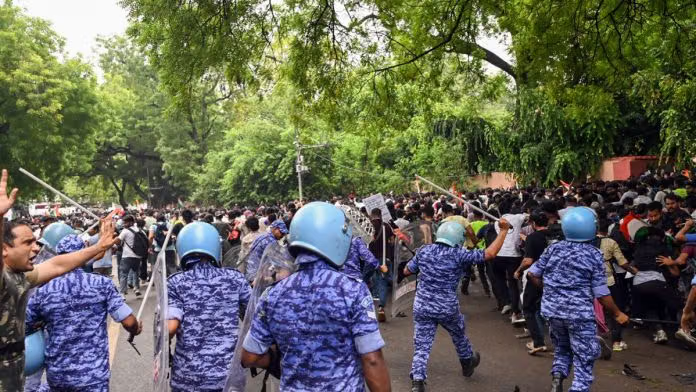
Amnesty International has accused Indian security forces of using excessive force against youth-led Gen-Z protests, alleging the use of tear gas, pellet guns and electric-shock devices during demonstrations. The findings were released Monday and focus on protests involving young people that have become a major political and human-rights issue in India.
Amnesty’s investigation alleges that the use of force breached policing standards and international human-rights principles. The allegations come as India’s Supreme Court has separately established a committee to investigate claims surrounding police conduct during the Gen-Z protests.
What Does Amnesty Allege?
According to Amnesty’s investigation, protesters were subjected to several forms of force, including:
- Tear gas
- Metallic pellet guns
- Electric-shock devices
- Other crowd-control measures

The organisation says some of these methods were used against young protesters during demonstrations. Amnesty has described the alleged use of such weapons as excessive and inconsistent with international standards governing peaceful assembly.
Government and Police Position On Gen-Z Protests
The Amnesty findings are not a judicial determination of wrongdoing. The allegations remain subject to investigation, particularly because the authorities have also raised concerns about disorder, violence and the conduct of some protesters.

The Supreme Court’s inquiry is therefore significant because it provides an independent legal mechanism for examining competing claims about what happened.
Why Are the Protests Important?
The Gen-Z protests have emerged as an important political development in India. Young protesters have used social media and unconventional forms of mobilisation, while the government’s response has become a major subject of political debate.
The controversy has also pushed India’s major political parties to reconsider how they communicate with younger voters.
Rahul Gandhi and the Political Fallout
The protests have become a major issue for the opposition Congress party. Leader of Opposition Rahul Gandhi has publicly challenged the government’s handling of the demonstrations and has demanded accountability over alleged police action.

The Congress has attempted to portray the issue as one of democratic rights and police accountability, while the BJP and government supporters have emphasised law and order.
Why the Supreme Court Probe Matters
The Supreme Court’s separate inquiry could ultimately provide a more authoritative assessment of the allegations. It may examine whether police used proportionate force, whether proper procedures were followed and what happened during specific incidents.

That distinction is important because Amnesty’s report represents the findings of a human-rights organisation, while the court-appointed process has a different legal status.
ALSO READ: Rahul Gandhi Dharna: Delhi Police Files FIR After Pellet-Gun Row
What Happens Next?
The controversy is likely to remain politically sensitive. If the Supreme Court inquiry confirms allegations of excessive force, it could trigger demands for accountability and changes in policing practices.
If evidence contradicts some of the allegations, that could significantly alter the political narrative. For now, the Amnesty report has added fresh international scrutiny to a controversy already being examined within India’s judicial system.